

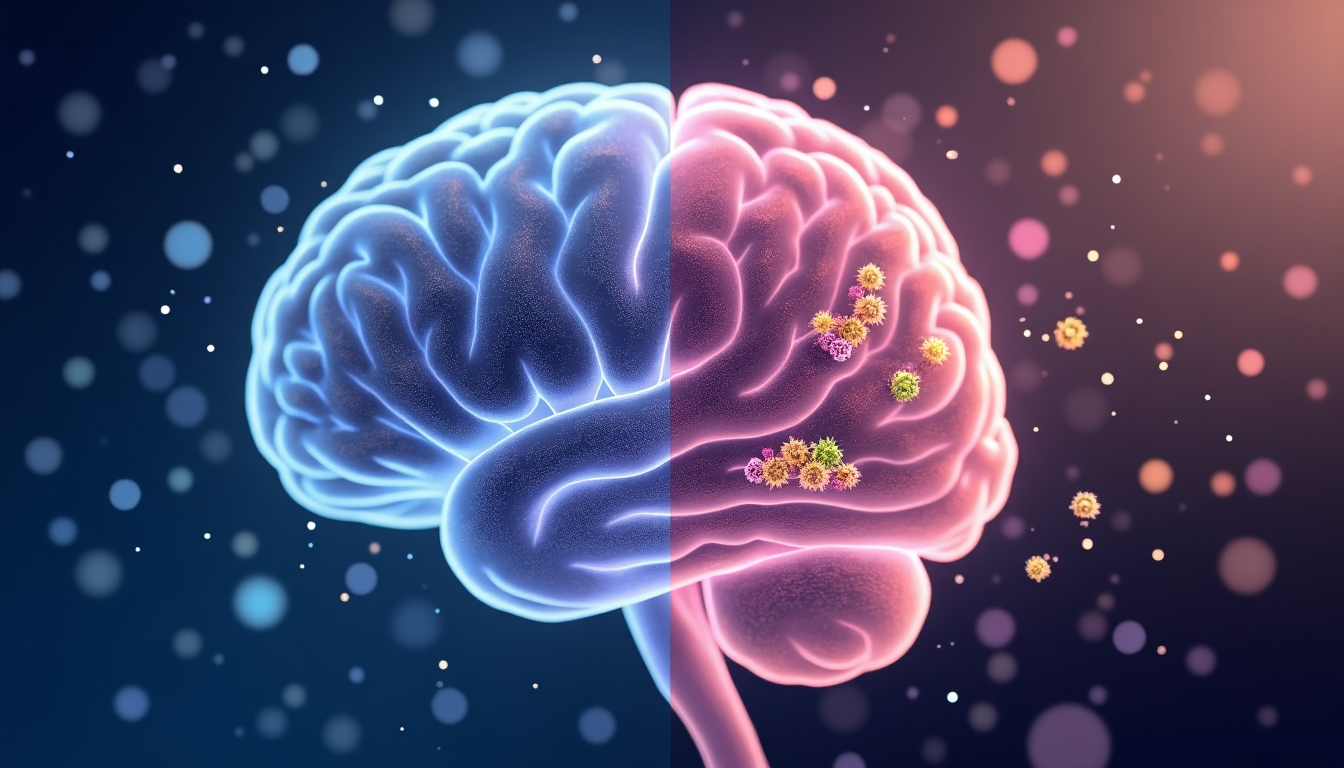
Your Gut and Mental Health: The Hidden Connection
The Vital Link Between Gut Health and Mental Well-Being
Are you aware that your gut contains more neurons than your spinal cord? This remarkable fact shows just how vital your digestive system is for your mental wellbeing.
We’ve discovered that your gut does far more than digest food. Your gut microbiome – home to trillions of beneficial bacteria – produces key brain chemicals, manages inflammation, and shapes your emotional health. These tiny organisms influence your mood, stress response, and even how clearly you think.
Your gut bacteria work as natural chemists, creating the same chemicals your brain uses to regulate mood. In fact, 90% of your body’s serotonin – often called the happiness chemical – comes from your gut.
We help people understand how their gut health shapes their mental wellbeing. Let’s explore the latest findings about the gut microbiome and mental health, plus practical ways to support both your digestive and brain health naturally.
The Gut-Brain Connection: Your Second Nervous System
Your gut and brain maintain a constant conversation that shapes your mental wellbeing. Let’s explore this fascinating connection that influences your daily life.
Your gut-brain axis: A Two-Way Street
Think of the gut-brain axis as your body’s internal communication network [18]. This remarkable system connects your digestive system with your brain through multiple pathways. Your gut houses 500 million neurons [18] – forming what we call your “second brain.”
How Your Gut Bacteria Talk to Your Brain
Your gut bacteria act as skilled communicators, sending messages to your brain through:
- Brain chemicals and metabolites
- Immune system signals
- Hormone pathways
- Direct nerve connections
What’s fascinating is that your gut bacteria produce many of the same chemicals found in your brain. 90% of your body’s serotonin and 50% of your dopamine live in your gut [18]. These bacteria even create GABA – a natural calming chemical that helps control anxiety [9].
Your Vagus Nerve: The Information Highway
The vagus nerve works as your gut-brain communication cable. 80% of its nerve fibers send signals from your gut to your brain [9]. This creates a rapid messaging system that constantly updates your brain about your digestive health [9].
We’ve found that this nerve helps maintain your gut barrier and manages inflammation [9]. When working properly, it keeps your gut bacteria and brain in perfect balance. This discovery opens new ways to support both your mental and digestive health naturally.
How Your Gut Shapes Your Mental Health
Your digestive system produces an astounding 95% of your body’s serotonin – the chemical that helps regulate your mood [9]. Let’s explore this remarkable connection between your gut and mental wellbeing.
Your Gut: Nature’s Chemistry Lab
Your gut bacteria work as tiny chemists, creating vital brain chemicals that influence your mood. Here’s what they produce:
- Your happiness chemical serotonin – made by Streptococcus, Enterococcus, and Escherichia bacteria [9]
- Your calming chemical GABA – produced by Lactobacillus and other beneficial bacteria
- Your motivation chemicals dopamine and norepinephrine – created by Bacillus and Serratia [9]
When Your Gut Barrier Needs Help
We’ve seen how gut inflammation affects your mental health in multiple ways. If your gut barrier becomes compromised (what we call “leaky gut”), bacteria enter your bloodstream, triggering inflammation [10]. This doesn’t just stay in your gut – it affects your brain function and mood.
Our research shows people with depression often have different gut bacteria patterns compared to others. They typically show higher levels of inflammatory bacteria and fewer beneficial species [10]. This helps explain why digestive problems and mood issues often appear together.
Your Gut Under Stress
Your gut’s stress response reveals fascinating insights. When you feel stressed, your nervous system signals your gut directly [10], leading to:
Physical Changes:
- Changes in gut movement
- Lower digestive efficiency
- Weakened gut barrier
What’s interesting is how this creates a cycle – stress changes your gut bacteria, which then affects how you handle stress [10]. Even small amounts of stress can change your eating patterns and gut function, potentially causing long-term changes in your gut bacteria [10].
This shows why caring for your gut health matters so much for your mental wellbeing. Your gut and brain work together constantly, each affecting the other’s health and function.
Beneficial Bacteria for Mental Health
Research shows that beneficial bacteria like Coprococcus and Dialister are notably depleted in people experiencing depression [11]. These bacteria, along with Faecalibacterium, consistently link to better quality of life measures [12].
Key bacteria we study include:
- Lactobacilli and Bifidobacteria – your natural calming chemicals
- Escherichia – your mood-supporting chemicals
- Bacteroides uniformis and Faecalibacterium prausnitzii – your brain-supporting nutrients [13]
The Power of Bacterial Diversity
We’ve found that a varied gut bacteria population helps emotional health. Studies show fewer anxiety and depression symptoms in people with diverse gut bacteria [14]. This pattern appears strongest in people with Prevotella-dominant gut types [15].
What fascinates us is how gut diversity responds to life experiences. While stress can reduce gut microbiome diversity, positive social connections and new experiences help increase it [15].
Depression, Anxiety and Your Gut
The latest research brings exciting discoveries about gut health and mood. A major study of 2,593 people identified 12 bacterial types linked to depression symptoms [11]. They found higher levels of Sellimonas, Lachnoclostridium, and Hungatella in people feeling more depressed [16].
These bacteria create brain chemicals that affect mood. They produce and control multiple chemicals vital for emotional balance [23, 24].
This research confirms what we’ve seen in our clinic – a healthy, diverse gut supports both digestive and mental wellbeing.
Daily Habits That Shape Your Gut-Brain Health
Are you looking to support both your digestive and mental wellbeing? Over our 25 years of clinical experience, we’ve seen how daily choices powerfully influence the gut-brain connection.
Exercise and Sleep: Your Gut’s Best Friends
Regular movement does more than keep you fit – it enhances our gut microbiome diversity [17]. When you exercise moderately, you boost beneficial gut bacteria that produce vital nutrients [18].
Your exercise benefits include:
- Better gut movement and blood flow
- More diverse gut bacteria
- Stronger gut barrier
- Improved stress handling
Even 18-32 minutes of movement three times weekly can change your gut bacteria [18]. But remember – these benefits need ongoing commitment [18].
Managing Your Stress Levels
We’ve seen how stress disrupts normal gut function. When stressed, your body releases hormones that change your gut bacteria and lower your immune defenses [19]. This creates a cycle – stress harms your gut, then poor gut health increases stress [3].
Breaking this cycle needs daily care:
- Get 7-8 hours of sleep nightly
- Practice regular relaxation
- Maintain consistent meal times
- Stay hydrated throughout the day
Poor sleep can damage your gut bacteria and heart health [20].
Your Environment Matters
We’ve found surprising links between your surroundings and gut health. Urban living and less time in nature change your gut bacteria [21]. Even air quality affects both your lungs and gut [21].
Your gut responds to:
- Temperature changes
- Rainfall patterns
- Green spaces
- Air quality [22]
This explains why nature time helps both your mood and digestion [18]. We guide people in creating environments that support their gut-brain health naturally.
Feed Your Gut, Support Your Mind
Are you looking to support your mental health naturally? Your food choices shape both your gut and brain health.
Key Nutrients for Your Brain
Your gut needs specific nutrients to produce brain chemicals. Omega-3 fats from fatty fish reduce inflammation and support gut-brain communication [23]. Colourful fruits and vegetables feed your beneficial gut bacteria [24].
And did you know 95% of your serotonin comes from your gut [1]? That’s why we focus on foods that support serotonin production:
- Turkey, eggs, and cheese for tryptophan
- Whole grains and legumes for B-vitamins
- Nuts and seeds for zinc and selenium
- Oily fish for omega-3 fats
Foods That Support Your Gut-Brain Health
We’ve seen remarkable results with fermented foods. Adding yogurt, kefir, sauerkraut, or kimchi helps maintain your gut balance [23].
The Mediterranean eating pattern shows particular promise for mental health. It provides B vitamins, zinc, and folate – vital nutrients for managing depression [24]. We love how this approach naturally supports your gut bacteria through fiber-rich foods.
Mindful Eating for Better Health
Mindful eating helps both your gut and mental wellbeing [25]. Here’s how we guide people to eat mindfully:
- Notice your food’s appearance, smell, and texture
- Stay present while eating
- Listen to hunger and fullness signals
- Avoid distractions during meals
This approach reduces stress eating and improves digestion [25]. Our clients often make better food choices naturally, without strict rules [25].
Remember, small changes make big differences. Start with one new habit – perhaps adding fermented foods or eating without distractions. Your gut and mind will thank you.
Your Gut and Mind: A Natural Partnership
Over our 25 years helping people with digestive health, we’ve seen how powerfully your gut shapes your mental wellbeing. Your trillions of gut bacteria influence your emotions, stress handling, and thinking ability.
We’ve helped thousands understand that gut health needs more than just good food. Your gut bacteria thrive on:
- Regular movement
- Quality sleep
- Stress management
- Mindful eating
- Time in nature
Are you ready to support your mental health naturally? Start with small changes – perhaps adding yogurt to your breakfast or taking a daily walk. We’ve seen these simple steps create remarkable improvements in both digestive and mental wellbeing.
Remember, your gut and mind work as partners. When you care for one, you support the other. Let’s help you build this vital connection for better health.
FAQs
Q1. How does gut health affect mental health?
The gut contains more neurons than the spinal cord and is often called the second brain. The gut-brain axis — the bidirectional communication network between the gut and brain via the vagus nerve and neurotransmitters — means gut health directly influences mood, anxiety, and cognitive function. Approximately 90% of serotonin is produced in the gut.
Q2. Can IBS cause depression and anxiety?
There is a strong bidirectional relationship between IBS and mental health. Gut dysbiosis and inflammation can affect neurotransmitter production and mood. Conversely, stress and anxiety worsen gut motility and symptoms. Addressing the gut imbalance — including SIBO where present — can have a significant positive impact on mental wellbeing.
Q3. What is the gut-brain axis?
The gut-brain axis is the communication network connecting the enteric nervous system (the gut’s own nervous system) with the central nervous system (brain and spinal cord) via the vagus nerve, the immune system, and the endocrine system. This two-way highway means the state of your gut microbiome directly influences brain function, mood, and stress response.
Q4. How much serotonin is made in the gut?
Approximately 90–95% of the body’s serotonin is produced in the gut. This is why gut health has such a direct influence on mood, anxiety, and overall mental wellbeing.
Q5. Can treating SIBO improve mood?
Many clients report improvements in mood, energy, and mental clarity as a secondary benefit of treating SIBO. The reduction in systemic inflammation, improved nutrient absorption, and restoration of a healthier gut microbiome all contribute to better mental wellbeing.
Q6. What role does diet play in maintaining a healthy gut-brain connection?
Diet plays a crucial role in maintaining a healthy gut-brain connection. Consuming a variety of nutrient-rich foods, particularly those high in omega-3 fatty acids, polyphenols, and probiotics, can support both gut and brain health. The Mediterranean diet, for example, has shown promise in supporting mental health through its positive effects on the gut microbiome.
References
[1] – https://pmc.ncbi.nlm.nih.gov/articles/PMC6047317/
[2] – https://my.clevelandclinic.org/health/body/the-gut-brain-connection
[3] – https://en.wikipedia.org/wiki/Gut–brain_axis
[4] – https://www.healthline.com/nutrition/gut-brain-connection
[5] – https://www.sciencedirect.com/topics/neuroscience/enteric-nervous-system
[6] – https://pmc.ncbi.nlm.nih.gov/articles/PMC9656367/
[7] – https://www.frontiersin.org/journals/neuroscience/articles/10.3389/fnins.2018.00049/full
[8] – https://pmc.ncbi.nlm.nih.gov/articles/PMC5526216/
[9] – https://www.nature.com/articles/s41598-022-05756-0
[10] – https://pmc.ncbi.nlm.nih.gov/articles/PMC7213601/
[11] – https://www.nature.com/articles/s41467-022-34502-3
[12] – https://pmc.ncbi.nlm.nih.gov/articles/PMC6882070/
[13] – https://pmc.ncbi.nlm.nih.gov/articles/PMC10384867/
[14] – https://pmc.ncbi.nlm.nih.gov/articles/PMC10055576/
[15] – https://www.nature.com/articles/s41598-020-77673-z
[16] – https://www.ndph.ox.ac.uk/news/the-bacteria-living-in-your-gut-may-play-a-key-role-in-whether-or-not-you-have-symptoms-of-depression
[17] – https://pmc.ncbi.nlm.nih.gov/articles/PMC5357536/
[18] – https://www.bbc.com/future/article/20220825-how-exercise-can-give-your-gut-microbes-a-boost
[19] – https://www.webmd.com/digestive-disorders/how-to-improve-your-gut-health-and-mental-health
[20] – https://www.health.harvard.edu/diseases-and-conditions/the-gut-brain-connection
[21] – https://www.heartandstroke.ca/articles/nurturing-your-gut-brain-connection-for-whole-body-health
[22] – https://nutrition.bmj.com/content/6/Suppl_3/s30
[23] – https://www.nature.com/articles/s41522-023-00459-4
[24] – https://www.health.harvard.edu/blog/gut-feelings-how-food-affects-your-mood-2018120715548
[25] – https://www.rsm.ac.uk/latest-news/2024/food-and-mood-eating-to-support-mental-health-by-toral-shah/
[26] – https://www.uclahealth.org/news/article/you-are-what-you-eat-diet-may-affect-your-mood-and-brain
[27] – https://pmc.ncbi.nlm.nih.gov/articles/PMC5556586/
